
Football shirt sponsors can become almost as memorable as the shirts themselves.
For supporters who grew up watching English football in the 1990s, certain combinations are instantly recognizable. Manchester United had Sharp across the front of their shirts, Arsenal had JVC, Liverpool had Carlsberg, Blackburn Rovers had McEwan’s Lager, while Aston Villa began the Premier League era with Mita Copiers.
The Manchester United and Sharp partnership is perhaps one of the best examples. Sharp appeared on United shirts throughout an era that included the emergence of the Class of ’92 and the club’s first Premier League titles. Even decades later, it is difficult to picture some of those shirts without the Sharp name across the front.
Those sponsors also tell us something about how different football’s commercial landscape was.
When the Premier League began in 1992/93, nine of its 22 clubs had technology companies as shirt sponsors. Manchester United had Sharp, Arsenal had JVC, Everton had NEC, Manchester City had Brother and Chelsea had Commodore. Other shirts advertised everything from beer and cars to photocopiers, chemicals and building materials.
One industry was completely absent: gambling.
Table of Contents
Gambling Companies Were Nowhere to Be Seen
None of the 22 clubs competing in the inaugural 1992/93 Premier League season had a gambling company as its front-of-shirt sponsor.
It wasn’t merely an anomaly of that first season. Five years later, in 1997/98, there were still no gambling brands on Premier League shirts. Software and IT companies were the largest category that season with six sponsors, followed by consumer electronics with four.
That makes what happened next particularly striking.
Within little more than a decade, online sportsbooks and casinos went from having no presence on Premier League shirts to becoming a familiar part of English football. By 2016/17, 10 of the Premier League’s 20 clubs had gambling companies on their shirts.
The trend continued. In 2024/25, 11 of the 20 Premier League clubs had a gambling company as their main shirt sponsor.
Some clubs stayed with the same gambling sponsor for several years. Others moved repeatedly between sportsbooks and casinos, accumulating a surprisingly long list of gambling brands across the front of their shirts.
That raised the question behind this CryptoSportsLab investigation:
Which English football clubs have had the most gambling companies as their main shirt sponsor?
What We Are Counting
For this research, we are counting distinct gambling brands that appeared as the principal front-of-shirt sponsor of an English club’s men’s first team.
A brand counts once, regardless of how long the sponsorship lasted. If a gambling company sponsored the same club for five seasons, it still counts as one. If it left and returned several years later, it also remains one distinct sponsor.
Sleeve sponsors, stadium advertising, regional partnerships and deals where a company was described as an “official betting partner” without occupying the main position on the front of the shirt are not included.
That distinction has become particularly relevant this season.
A 24-Year Premier League Era Has Just Ended
The 2026/27 season is the first since 2001/02 in which gambling companies are absent from the main sponsorship position on Premier League shirts.
Premier League clubs agreed in April 2023 to collectively withdraw gambling sponsorship from the front of matchday shirts, with the change taking effect from the beginning of the 2026/27 season. The previous season had seen 11 clubs carrying gambling brands in that position.
The agreement does not mean gambling sponsorship has disappeared from the Premier League.
Gambling companies can continue to sponsor clubs and advertise in other permitted positions. Everton provides a clear example. Stake was Everton’s main shirt sponsor from 2022/23 through 2025/26. When the new front-of-shirt restriction arrived for 2026/27, CMC Markets took the main position while Stake remained with Everton as its official sleeve partner.
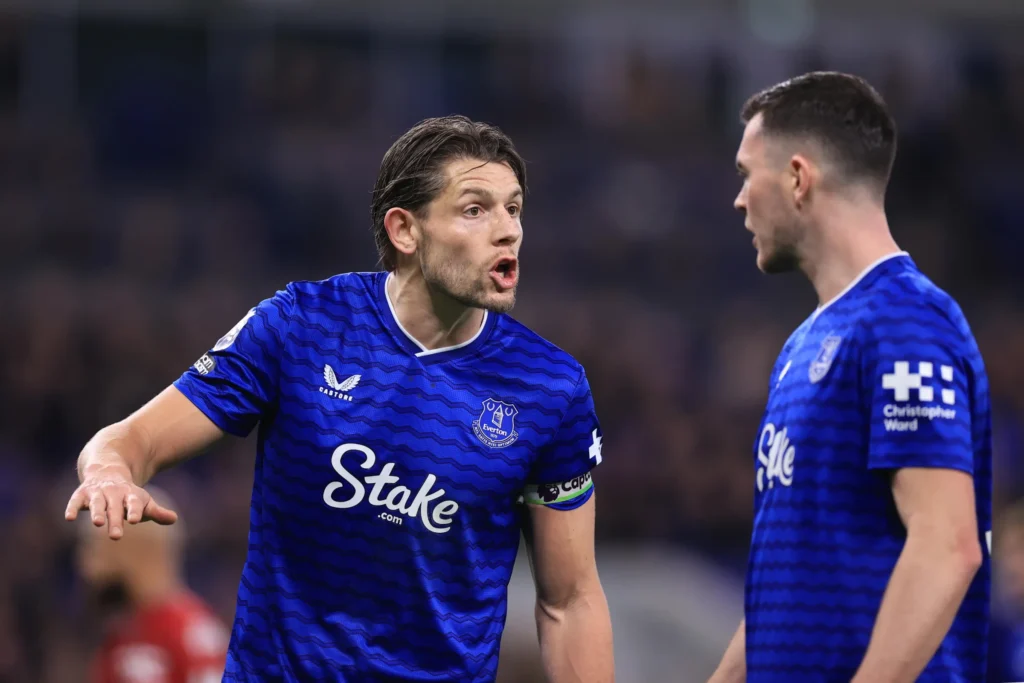
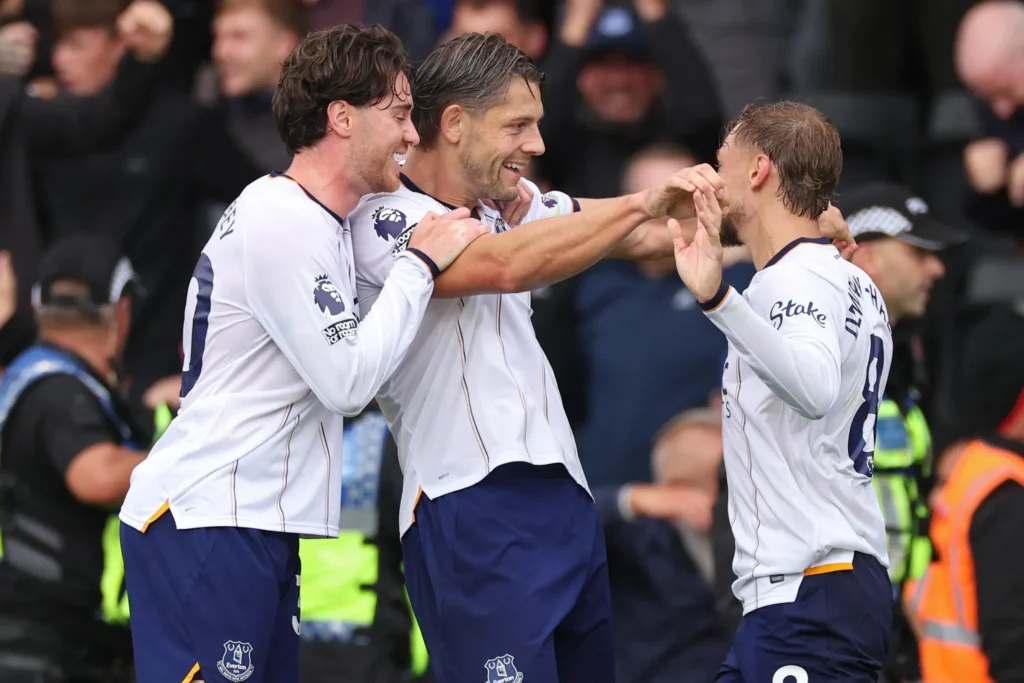
So gambling sponsorship has not disappeared from English football. What has ended, at least in the Premier League, is the era in which betting and casino brands could occupy the most prominent advertising position on a club’s shirt.
This is a significant change, given that gambling brands were absent from Premier League shirts for the competition’s entire first decade. What followed was a remarkable transformation, as betting companies became increasingly common throughout the 2000s and 2010s, with some clubs moving from one gambling sponsor to another.
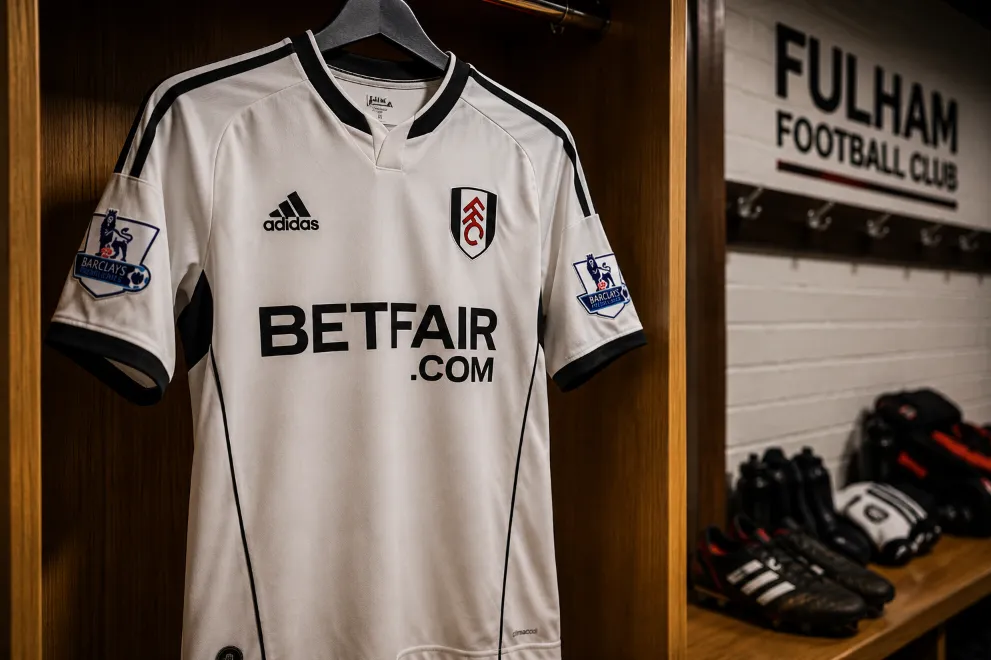
The starting point was 2002/03. Ten years after the Premier League was formed, Fulham became the first club to carry a gambling company on the front of its shirt, partnering with Betfair.
Fulham and Betfair: Where the Premier League Gambling Shirt Era Began
The story begins with Fulham in 2002.
The club had returned to the top flight for the 2001/02 season after storming to the First Division title the previous year. Pizza Hut appeared on the front of Fulham’s shirts for their first Premier League campaign, but the partnership lasted just one season.
For 2002/03, Pizza Hut was replaced by a very different type of company: Betfair.
It was a significant moment. Ten seasons after the Premier League began, Betfair became the first gambling company to appear as the main sponsor on the front of a Premier League shirt.
Betfair was still a young company. Founded in 2000, it had built its business around the betting exchange model, allowing customers to bet against one another rather than only placing bets with a traditional bookmaker. Just two years after launching, its name was appearing across the shirts of a Premier League club.
Fulham were very much on their own.
Look around the league in 2002/03 and the difference is striking. Manchester United had Vodafone, Arsenal had O2, Liverpool had Carlsberg, Chelsea had Fly Emirates and Leeds United had Strongbow. Fulham were the only Premier League club with a gambling company across the front of their shirts.
Gambling sponsorship had arrived in the Premier League, but at this point it was still an outlier.
Betfair Makes Its Premier League Debut
Betfair’s first Premier League weekend as Fulham’s shirt sponsor could hardly have gone much better.
Fulham opened the 2002/03 season at home to Bolton Wanderers on 17 August. Bolton scored first, but Fulham responded by putting four past them in a 4-1 victory.
Among the scorers was Louis Saha. Yes, the future Manchester United striker was leading the line for Fulham back in 2002. Anyone feeling old yet?
The match also gave us a great snapshot of a small piece of Premier League history. On the opening day of the season, Fulham walked onto the pitch with Betfair across their shirts while every other club in the division still had a non-gambling company occupying that space.
From One Gambling Sponsor to Four
Fulham and Betfair had broken new ground in 2002/03, but gambling sponsorship did not immediately take over the Premier League.
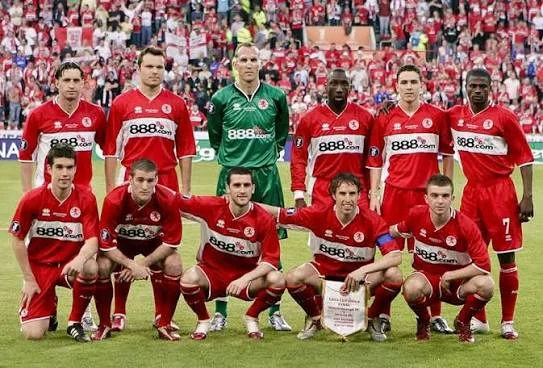
The next significant arrival came two seasons later. For 2004/05, Middlesbrough replaced Dial-a-Phone with 888.com, giving the online gambling company one of the most prominent advertising positions in English football.
Unlike Betfair, which had built its name around sports betting, 888.com was strongly associated with online casino and gaming. This was an early sign that football shirt sponsorship would attract companies from across the gambling industry, not just traditional bookmakers and sportsbooks.
The partnership also gave 888.com considerable exposure during one of the most memorable periods in Middlesbrough’s history. The company remained on the shirt for three seasons, including the club’s remarkable run to the 2006 UEFA Cup final.
Why Gambling Companies Wanted Premier League Shirts
There was a simple reason these deals were becoming attractive.
Premier League clubs were no longer advertising only to supporters in England. Matches were being broadcast around the world, giving a company on the front of a shirt repeated exposure to international audiences.
32Red made this point when it signed its Aston Villa deal in 2006. The company spoke about the millions of people around the world who would see the 32Red name whenever Villa played.
For an online gambling company, that audience was particularly valuable. A physical business might have little use for millions of viewers in another country, but an online operator could potentially turn that exposure into customers.
This also helps explain why some gambling brands appearing on English shirts would become far more familiar to football supporters than they were to the wider British public.
The relationship between gambling and Premier League football was beginning to make commercial sense for both sides. Clubs had a new group of companies willing to spend heavily on sponsorship, while gambling operators gained access to one of the world’s most watched football competitions.
Four gambling shirt sponsors in 2006/07 was still some distance from what would follow, but the direction of travel was becoming clear.
Which Clubs Embraced Gambling Sponsorship the Most?
By 2006/07, Fulham had been joined by Middlesbrough, Aston Villa, Blackburn Rovers and Tottenham as gambling brands became an increasingly familiar sight on English football shirts.
What followed over the next two decades went far beyond a handful of clubs experimenting with a new type of sponsor. Betting and casino companies became a regular presence, and some clubs moved from one gambling brand to another repeatedly.
Rather than simply counting the number of seasons clubs spent with gambling companies on their shirts, we wanted to know which had worked with the greatest number of different brands.
The results produced a three-way tie.
Seven Sponsors Apiece: English Football’s Gambling Shirt Kings
Burnley, Aston Villa and Fulham sit level at the top of our research, with seven different gambling brands having appeared as principal front-of-shirt sponsors for each club.
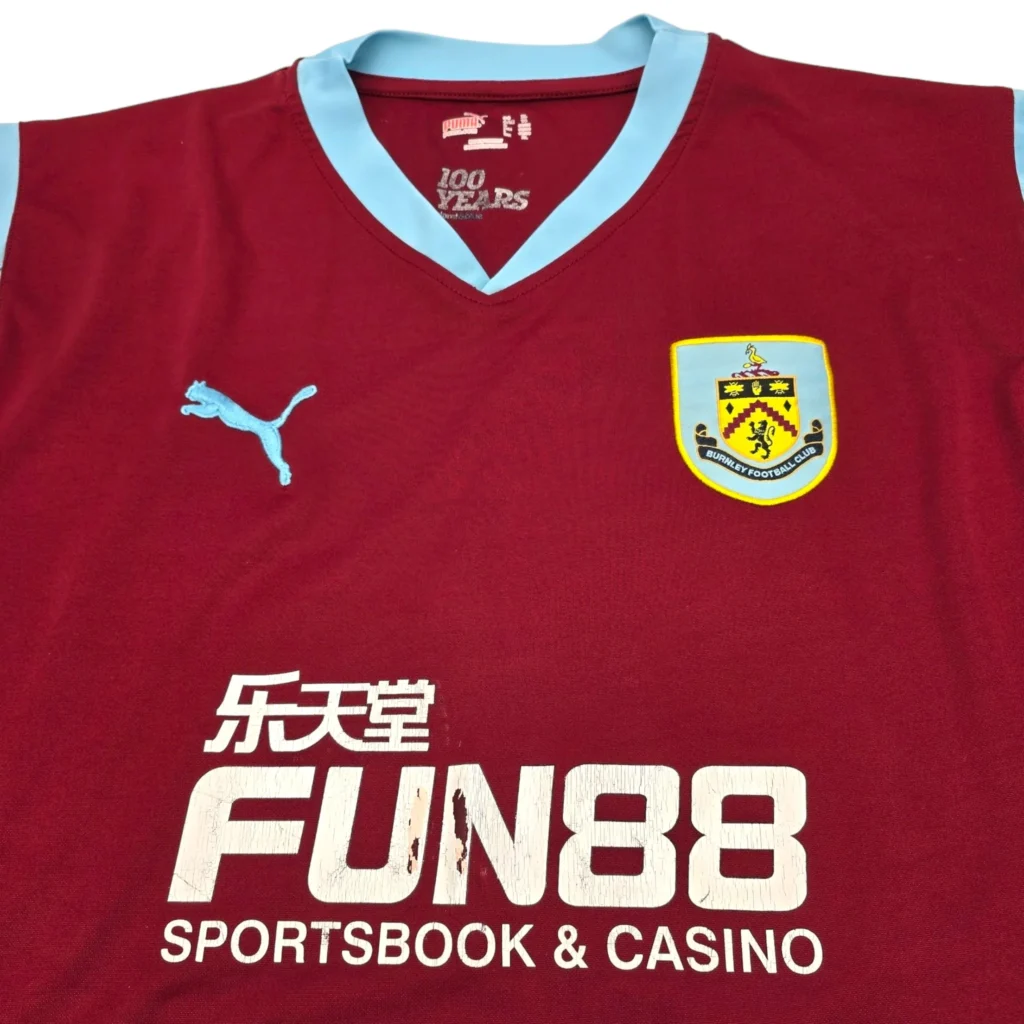
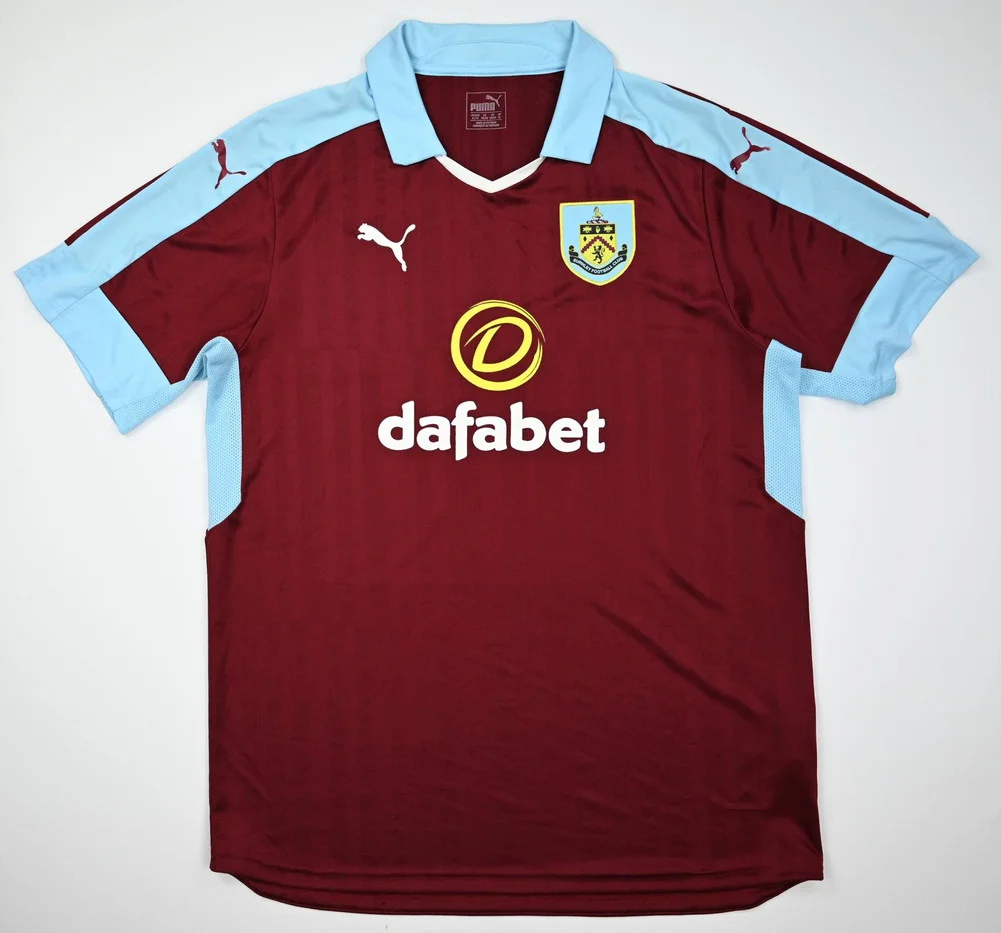
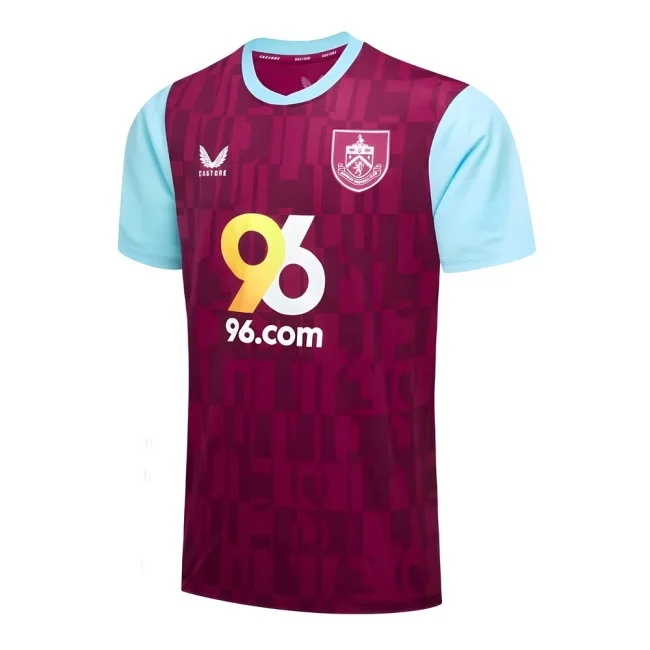
Burnley’s history is perhaps the clearest example of how frequently some clubs moved between gambling companies. Fun88 first appeared in 2010/11 and later returned for the 2014/15 Premier League season. Dafabet, LaBa360, LoveBet, Spreadex Sports, W88 and 96.com followed, taking Burnley to seven distinct brands.
What makes Burnley stand out is how concentrated that sponsorship history became. From 2016/17 onwards, gambling companies occupied the front of the shirt in most seasons, interrupted only occasionally by non-gambling sponsors.
Aston Villa reached the same total over a much longer period. Their first was 32Red in 2006, followed by Genting Casinos, Dafabet, Unibet, W88, BK8 and Betano. 32Red also returned for a second spell in 2018/19, but under our methodology it still counts as a single brand. Villa’s gambling sponsorship history therefore stretches from the mid-2000s right through to Betano in 2025/26.
Fulham complete the trio. We have already covered their historic Betfair sponsorship in 2002/03, but that proved to be only the beginning. Marathonbet, Grosvenor Casinos, Dafabet, BetVictor, W88 and SBOTOP subsequently appeared on Fulham shirts, bringing their total to seven different gambling brands.
The three clubs reached the same number in very different ways. Fulham were there at the beginning, Villa’s involvement stretched across almost two decades, while Burnley went through a particularly concentrated succession of gambling sponsors.
How the Rest of English Football Compares
Beyond the three leaders, the numbers remain surprisingly high.
Sunderland came closest to joining them with six different gambling sponsors, while Swansea City and QPR reached five. The table below shows how the clubs at the top of our research compare.
| Club | Different Gambling Sponsors | Brands |
|---|---|---|
| Burnley | 7 | Fun88, Dafabet, LaBa360, LoveBet, Spreadex Sports, W88, 96.com |
| Aston Villa | 7 | 32Red, Genting Casinos, Dafabet, Unibet, W88, BK8, Betano |
| Fulham | 7 | Betfair, Marathonbet, Grosvenor Casinos, Dafabet, BetVictor, W88, SBOTOP |
| Sunderland | 6 | BoyleSports, Tombola, Dafabet, BETDAQ, Spreadex Sports, W88 |
| Swansea City | 5 | 32Red, BETEAST, LeTou, BetUK, YoBet |
| Queens Park Rangers | 5 | Smarkets, Royal Panda, BetUK, Football Index, CopyBet |
| Bournemouth | 4 | Mansion, M88, Dafabet, bj88 |
| Watford | 4 | 138.com, Sportsbet.io, Stake, MrQ |
| Wolves | 4 | Sportingbet, W88, ManBetX, Debet |
| Middlesbrough | 4 | 888.com, 32Red, Unibet, Midnite |
| Crystal Palace | 4 | Mansion, ManBetX, W88, NET88 |
| West Bromwich Albion | 3 | Bodog, TLCBET, K8 |
| Wigan Athletic | 3 | 188Bet, 12Bet, KB88 |
| Southampton | 3 | LD Sports, Sportsbet.io, Rollbit |
| Blackburn Rovers | 3 | Bet24, Dafabet, 10Bet |
| Hull City | 3 | totesport, 12Bet, SportPesa |
It Was Never Just a Premier League Story
Perhaps the most revealing part of our research is how often the Championship crops up.
Gambling companies did not suddenly lose interest when a club dropped out of the Premier League. Burnley wore Fun88 in the Championship, Aston Villa had Unibet and 32Red during their three seasons outside the top flight, and several other clubs on our list attracted gambling sponsors without Premier League football to offer.
There is also plenty of crossover between the clubs. W88 appears at Burnley, Aston Villa and Fulham. Dafabet turns up at Burnley, Villa, Fulham, Sunderland and Blackburn. 32Red can be found at Villa, Swansea and Middlesbrough.
For the operators, the club might change, but the strategy was often the same: get the brand onto a football shirt and in front of supporters every weekend.
Then some clubs barely trouble our table despite having some of the most recognizable gambling-sponsored shirts of the era.
Stoke City are the perfect example. They don’t trouble the leaders for the number of different brands because they didn’t need to. Their long-running relationship with bet365 was almost the opposite of Burnley’s revolving door of gambling sponsors.
It is a useful reminder that having the most different gambling sponsors and spending the longest time with gambling on the shirt are two very different things.
From Betfair to Betano: The End of an Era
When Fulham walked out with Betfair across their shirts in 2002/03, they were doing something no Premier League club had done before. By the end of 2025/26, seeing a betting or casino logo on the front of a football shirt barely warranted a second glance.
Our research shows just how much changed in between. Burnley, Aston Villa and Fulham each had seven different gambling brands as principal shirt sponsors, with Sunderland close behind on six. What began with a single club eventually spread throughout the Premier League and deep into the Championship.
Something is fitting about Fulham ending up among the record holders. The club that started the Premier League’s gambling shirt era ultimately finished with seven different gambling brands having occupied the same space.
Gambling companies have not disappeared from English football. Their logos can still be found on sleeves, advertising boards and through wider betting partnerships, while outside the Premier League, front-of-shirt gambling sponsorship remains part of the landscape.
But the most visible piece of advertising on a Premier League shirt is now off limits to gambling companies.
For supporters who have followed English football over the past 20 years, those logos have become part of the visual history of the game. Betfair at Fulham, 32Red at Aston Villa, bet365 at Stoke, Betway at West Ham, Dafabet at Sunderland and countless others became inseparable from particular kits and seasons.
Football shirts have always reflected the commercial world around the game. For more than two decades, gambling companies occupied a remarkable amount of that space.
The shirts will look different from now on.
Sources
Premier League – Clubs Agree to Withdraw Gambling Sponsorship From the Front of Matchday Shirtshttps://www.premierleague.com/en/news/3147426
Premier League – The Inaugural 1992/93 Premier League Seasonhttps://www.premierleague.com/en/news/5873
SBC News – A Short History of Betting Shirt Sponsorship in Footballhttps://sbcnews.co.uk/features/comment/2018/03/14/scott-longley-short-history-betting-shirt-sponsorship-football-part-1/
The Guardian – The Changing Face of Premier League Shirt Sponsorshiphttps://www.theguardian.com/football/2017/oct/08/changing-face-premier-league-shirt-sponsorships-gambling
Academic Research – Gambling Sponsorship and Advertising in the English Premier Leaguehttps://pmc.ncbi.nlm.nih.gov/articles/PMC6795541/
Football Kit Archive – Burnley FC Sponsor Historyhttps://www.footballkitarchive.com/burnley-fc-sponsor-history-t33/
Football Kit Archive – Aston Villa Sponsor Historyhttps://www.footballkitarchive.com/aston-villa-sponsor-history-t10/
A Note on Our Research
We used many additional sources while researching this article, including club announcements, historical shirt archives, contemporary news reports and sponsorship records. These were used to verify individual sponsors, seasons and sponsorship changes across the clubs included in our research.
Listing every source would make the references considerably longer than the article needs, so the sources above represent a selection of the most relevant material used.